Case Study: Valkyrie Eir Bands for Wrist and Thumb Activation in C4/5 SCI
Clinic: Hobbs Rehabilitation Intensive Neurotherapy Centre
Clinician: Kate Blythe, Senior Neurological Physiotherapist
Date: 05 September 2025
Patient Profile: 28-year-old woman with C4/5 spinal cord injury (SCI), ASIA C classification
1. Introduction & Context
About The MiNT Academy:
2. Setup & Implementation
Setting: Outpatient clinic
-
Setup time: 5-10 minutes; however, this was also in part due to exploring electrode positioning
-
Training: As a clinician, I received a 2 hour training session.
-
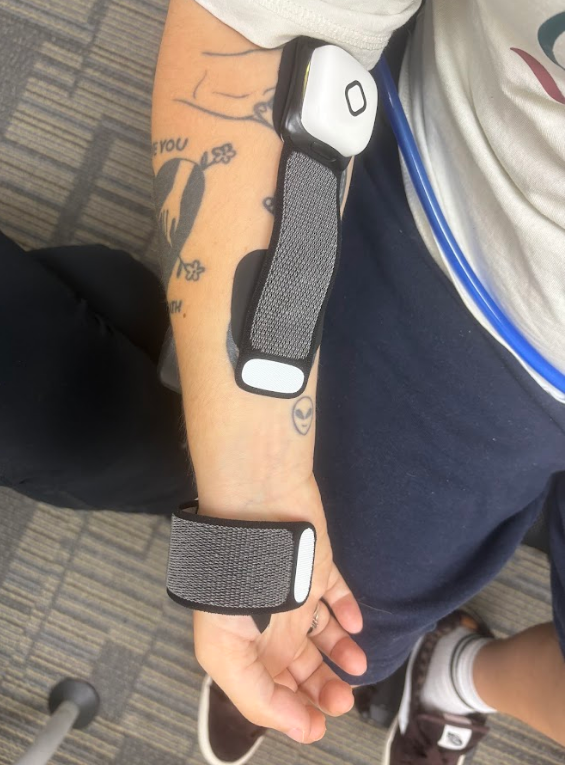
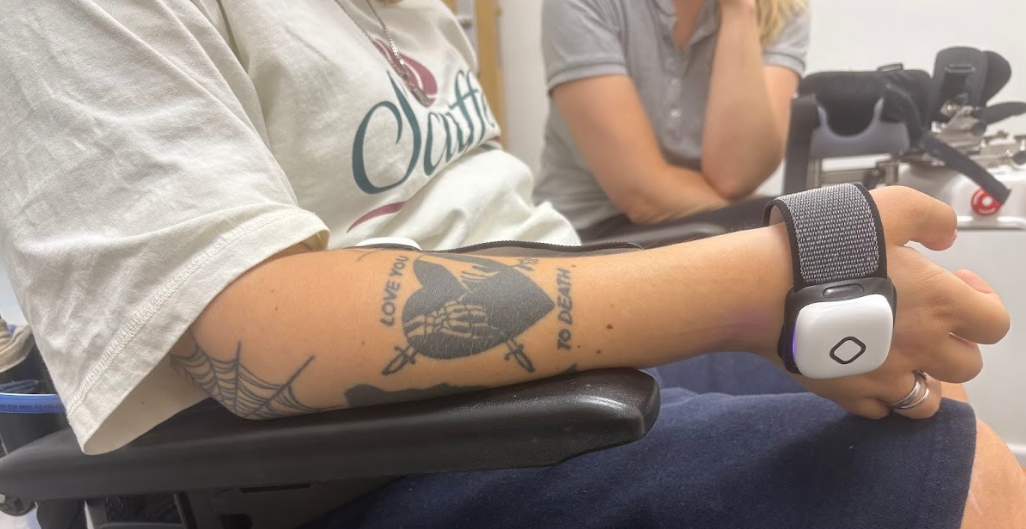
App & device setup: We explored various different electrode positions, particularly for the thumb as the correct movement pattern for both flexion and extension was difficult to find. We were required to cut the electrodes to make them smaller for the hand to assist with this.
-
Duration: This was an exploratory session therefore, this device was only used once for the patient.
3. Ease of Use
Clinician Perspective:
The device is easy to set up however, you do need to remember to keep it charged up which is different to other FES devices which are generally battery operated therefore are ready to use.
During the session, the patient was able to control the stimulation via the phone which she was not able to do with other devices.
Patient Perspective:
"It did provide the movement we were looking for quite easily and concisely. I also think it was quite handy that you'd be able to use it via phone as these tend to be much more accessible than say something with buttons, for example."
4. Integration into Clinical Workflow
5. Observed Outcomes
It was nice to see the patient engaging with the device, as generally this is difficult with limited hand function.
6. Discussion & Lessons Learned
- The patient being able to start and stop the stimulation independently
- Easy setup, and I prefer the magnetic attachment over the standard wires
- The electrodes were easy to cut to size
Challenges:
- Needing to remember to charge the device/keep the device charged.
- The device remains fairly passive within its current functionality in that, unless it is timed with an active task, there will likely be limited centrally driven change. However, this is generally a limitation for all FES devices unless EMG-triggered.
Resolution:
Getting the patient active within a task.
Comparison to Other NMES Systems:
I like the touch screen app as this does allow for more accessible use for patients with limited hand function.
7. Future Implementation & Recommendations
Suggested Improvements:
A wireless battery charger/stand so both phone and stimulators can remain charged.
Home Use Potential:
This would be easy for patients to use at home.
Training & Support:
The wider team have access to training.
Long-Term Integration at Hobbs Rehabilitation:
Although I like the functionality, in comparison to other devices, it does remain expensive. Other devices are used at tech that can be more cheaply purchased, and therefore, it may be difficult to justify the extra cost over other devices. i.e. Neurotrac ~£100
8. Conclusion
The Eir bands are easy to set up when you have a good understanding of electrical stimulation principles. They have been designed to be easier for a patient with reduced hand function to be able to set up independently which is great to see which in turn resulted in the patient being more engaged with the device.
— Kate Blythe, Specialist Neurological Physiotherapist, Hobbs Rehabilitation
Connect with us
As a previous NHS AHP Ward Manager, Alison has always worked within innovative therapy roles. This continues at The MiNT Academy, a growing neurotechnology platform combining clinical education and product development.
As Principle Investigator in technology trials, she has aided the development of devices from concept to market, with recent focusses on Virtual Reality and Exoskeletons. Alison has presented at and organised numerous national and international conferences, including as MiNT Chair at RehabWeek 2022. She has also completed a Post-Graduate Certificate in Medical Education and lectures at multiple UK academic institutions.
Alongside this, Alison works clinically at Hobbs Rehabilitation Intensive Neurotherapy Centre in Bristol, combining the use of therapy devices with conventional hands-on treatment, for outpatients with a variety of neurological conditions. Alison uses all of her roles to passionately drive forward the use of neurotechnology in clinical practice to optimise opportunities and outcomes for patients.
Chrissy trained as a teacher before embarking on her career in neurological rehabilitation and enjoys using her teaching skills in all areas of her work with Hobbs Rehabilitation and MiNT.
As Events Lead for The MiNT Academy, Chrissy is embracing the opportunity to discuss with fellow clinicians, academics and industry partners the benefits of using neurotechnology with our communication impaired clients, while encouraging further development in this vital area.
Outside of speech and language therapy, Chrissy enjoys swimming, singing with her local rock choir, baking, sewing, and camping with her family.
Trained in the Ekso GT, ReWalk and the Able Exoskeleton, Louis has 10 years’ of hands-on experience with these types of devices with a variety of medical conditions at Hobbs Rehabilitation. In this time, he also trialed a number of other exoskeletons on the market with the aim of exploring what fits the clinical and functional needs of the patient.
Louis has helped establish a research partnership between Hobbs Rehabilitation with The University of Winchester, which in 2019 published an article on the effects exoskeleton rehabilitation can have on the vascular system in the Journal of Spinal Cord Medicine. Louis has also contributed to publications for the Bionic Leg (Clinical Rehabilitation, 2020) and more recently the GMove Suit (PLOS One, 2025) with the University of Southampton.
In 2022 Louis was on the expert panel for the M.O.T.I.O.N project, exploring mechanical orthosis for children with neurological disorders. He is currently project managing the UK government funded, multi centered, Eurostars Project FREEDOM which looks to establish the first exoskeleton designed for people with Multiple Sclerosis.
With over a decade of commercial experience, Barry has worked with leading neurological rehabilitation MedTech companies in various roles, including clinical, business development, market access, and commercial operations. He has successfully assisted multiple organisations in shaping their business development, sales, marketing, and clinical strategy plans at different stages of commercialisation.