Jan 13
What is Neurotechnology?
Neurotechnology, as a term, has been used in many different ways over the past half century, and as the field of neuroscience grows and advances, there has naturally been some confusion about its definition.
Language is inherently fluid, and within this fluidity there is so much room for words and their meanings to be bent, shaped, and directed in so many ways, especially with terms still in their relative infancy, such as neurotechnology. While this does sometimes bring confusion, it is so exciting to be a part of creating not only wider access to new technologies, but to also be a part of defining what neurotechnology itself actually means.
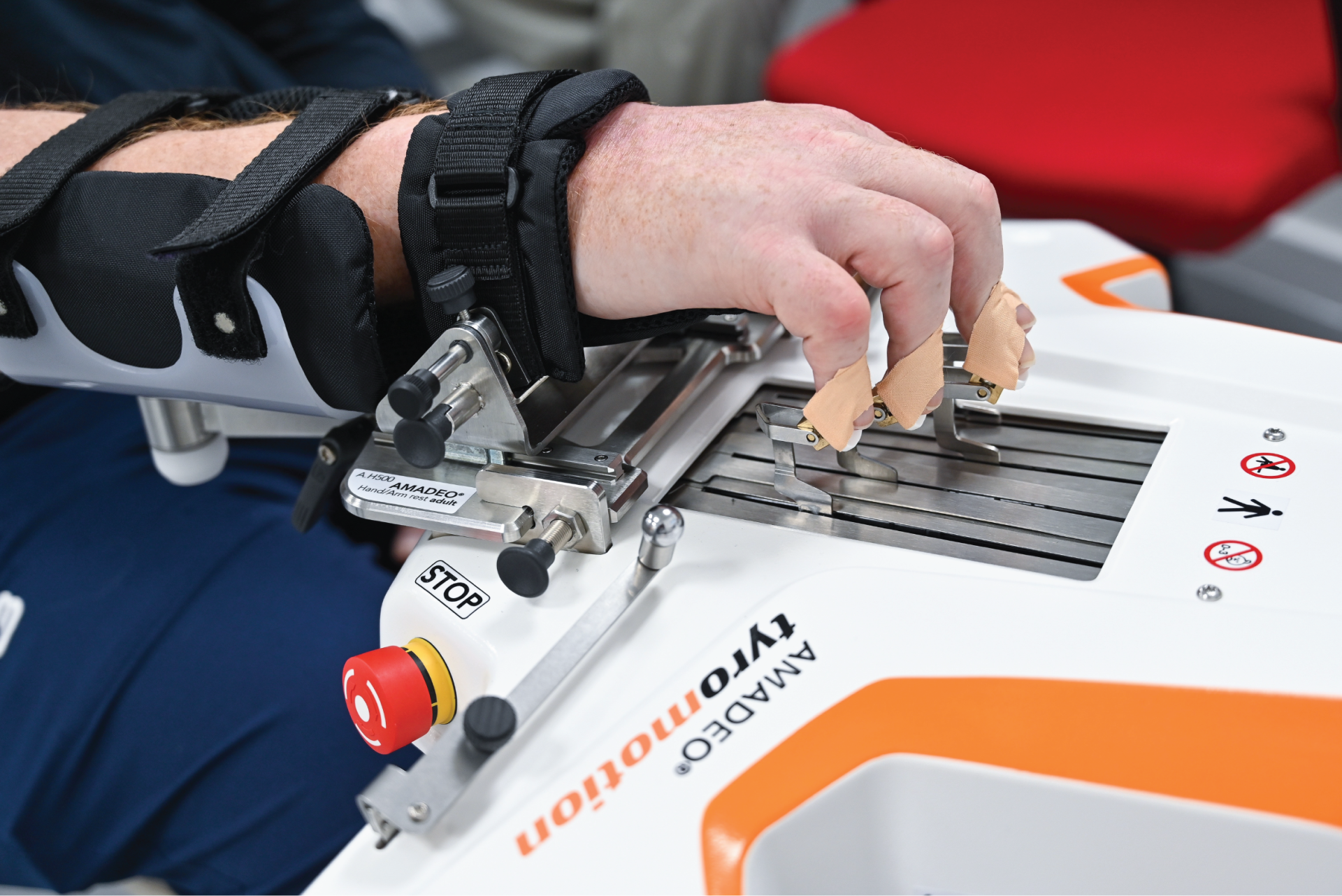
Here at MiNT, we have been using the term for many years now, as MiNT itself stands for “Masterclass in Neurotechnology”. We use the term to describe any technology that is used for the benefit of people with neurological impairments. Neurotechnology can be any technology that is concerned with addressing impairments of the nervous system, and for the team at MiNT, this includes robotics, sensor-based technologies, wearables, Functional Electrical Stimulation, Brain-Computer Interfaces, Virtual Reality simulators, and so much more… The possibilities of neurotechnology, and what it can be, are endless.
While some use “neurotechnology” to exclusively reference technologies that record and modulate the activity of the human nervous system, at MiNT we choose not to be quite so limiting with our definition of the term. These groups, including the UK government, consider neurotechnology to solely include Brain-Computer Interfaces, which interact with the brain, and bioelectronic devices, that interact with the spinal cord and peripheral nerves. Of course, these are all elements of what we believe to be under the neurotechnology umbrella, but we dare to dream bigger.
While the official definition of the term is still up for debate, we believe that it is important to leave room for all of the potential of neurotechnology - but if the alternative definition becomes the more widely acknowledged of the two, naturally we will embrace that change. However, we believe that what neurotechnology can be, and is becoming, is so much more than just a small subset of technologies. BCI and neural interfaces is just one, very exciting, direction that neurotechnology is growing in, but we invite you to imagine all the possibilities of the vast array of therapeutic opportunities that we can explore.
While some use “neurotechnology” to exclusively reference technologies that record and modulate the activity of the human nervous system, at MiNT we choose not to be quite so limiting with our definition of the term. These groups, including the UK government, consider neurotechnology to solely include Brain-Computer Interfaces, which interact with the brain, and bioelectronic devices, that interact with the spinal cord and peripheral nerves. Of course, these are all elements of what we believe to be under the neurotechnology umbrella, but we dare to dream bigger.
While the official definition of the term is still up for debate, we believe that it is important to leave room for all of the potential of neurotechnology - but if the alternative definition becomes the more widely acknowledged of the two, naturally we will embrace that change. However, we believe that what neurotechnology can be, and is becoming, is so much more than just a small subset of technologies. BCI and neural interfaces is just one, very exciting, direction that neurotechnology is growing in, but we invite you to imagine all the possibilities of the vast array of therapeutic opportunities that we can explore.
Connect with us
Copyright© 2022 Hobbs Rehabilitation LTD
Alison Watt
Head of Clinical Operations
Alison is Head of Clinical Operations for The MiNT Academy. With over 10 years of clinical experience within specialist neurological services, Alison previously worked in the NHS specialising in stroke and neurorehabilitation.
As a previous NHS AHP Ward Manager, Alison has always worked within innovative therapy roles. This continues at The MiNT Academy, a growing neurotechnology platform combining clinical education and product development.
As a previous NHS AHP Ward Manager, Alison has always worked within innovative therapy roles. This continues at The MiNT Academy, a growing neurotechnology platform combining clinical education and product development.
Alison coordinates research, development and education activities to enable increased accessibility to clinically effective devices.
As Principle Investigator in technology trials, she has aided the development of devices from concept to market, with recent focusses on Virtual Reality and Exoskeletons. Alison has presented at and organised numerous national and international conferences, including as MiNT Chair at RehabWeek 2022. She has also completed a Post-Graduate Certificate in Medical Education and lectures at multiple UK academic institutions.
Alongside this, Alison works clinically at Hobbs Rehabilitation Intensive Neurotherapy Centre in Bristol, combining the use of therapy devices with conventional hands-on treatment, for outpatients with a variety of neurological conditions. Alison uses all of her roles to passionately drive forward the use of neurotechnology in clinical practice to optimise opportunities and outcomes for patients.
As Principle Investigator in technology trials, she has aided the development of devices from concept to market, with recent focusses on Virtual Reality and Exoskeletons. Alison has presented at and organised numerous national and international conferences, including as MiNT Chair at RehabWeek 2022. She has also completed a Post-Graduate Certificate in Medical Education and lectures at multiple UK academic institutions.
Alongside this, Alison works clinically at Hobbs Rehabilitation Intensive Neurotherapy Centre in Bristol, combining the use of therapy devices with conventional hands-on treatment, for outpatients with a variety of neurological conditions. Alison uses all of her roles to passionately drive forward the use of neurotechnology in clinical practice to optimise opportunities and outcomes for patients.
Helen Hobbs
The MiNT Academy Development Team
Helen is a specialist neurological physiotherapist with over 25 years of specialist clinical experience and extensive clinical skills including advanced Bobath training. She has a special interest inclinical education, training and research. Helen has held postgraduate clinical training roles at both Kings College NHS Hospital London Neuroscience Centre and Southampton University Hospital NHS Trust before establishing Hobbs Rehabilitation in 2005.
Helen's teaching and leadership skills resulted in international scholarships and fellowships taking Helen to the USA and South Africa. She has presented both nationally and internationally. Helen has close links with several academic institutions including Southampton, Imperial College, Loughborough , Portsmouth and Winchester Universities to provide clinical leadership for the design of future healthcare technologies and research projects.
Her publications have included the effects of robotic assisted gait training on vascular health in strokes and spinal cord injured patients and the European rehabilitation guidelines for MS patients post stem cell transplant.
Amy Dennis-Jones
The MiNT Academy Research Lead
Amy has over 20 years experience working within the field of Neurological rehabilitation. She has worked with a variety of settings capturing the full rehabilitation pathway from acute through to the community.
Since working for Hobbs Rehabilitation in 2015, Amy has worked with an array of neurotechnologies and is a trained Rewalk exoskeleton clinician. She has presented at varying conference and study days, and is on the local committee for ACPIN, a specialist interest group for physiotherapists working in Neurology.
Amy's position within Hobbs Rehabilitation has evolved into a split clinical and research role. She is part of the core development team working on MiNT, an innovative neurotechnology platform combining clinical education and product development as well as leading on research projects and further collaborations.
Outside of physiotherapy, Amy is a qualified yoga teacher and combines her experience with rehabilitation to teach chair/adaptive yoga classes.
Chrissy Bibby
The MiNT Academy Events Lead
Chrissy has worked in the field of adult acquired neurological speech and language therapy for over 15 years, initially in the NHS before joining Hobbs Rehabilitation, where she leads the Speech & Language therapy team. Clinically, she has a special interest in motor speech disorders and rehabilitation of the facial nerve.
Chrissy trained as a teacher before embarking on her career in neurological rehabilitation and enjoys using her teaching skills in all areas of her work with Hobbs Rehabilitation and MiNT.
As Events Lead for The MiNT Academy, Chrissy is embracing the opportunity to discuss with fellow clinicians, academics and industry partners the benefits of using neurotechnology with our communication impaired clients, while encouraging further development in this vital area.
Outside of speech and language therapy, Chrissy enjoys swimming, singing with her local rock choir, baking, sewing, and camping with her family.
Chrissy trained as a teacher before embarking on her career in neurological rehabilitation and enjoys using her teaching skills in all areas of her work with Hobbs Rehabilitation and MiNT.
As Events Lead for The MiNT Academy, Chrissy is embracing the opportunity to discuss with fellow clinicians, academics and industry partners the benefits of using neurotechnology with our communication impaired clients, while encouraging further development in this vital area.
Outside of speech and language therapy, Chrissy enjoys swimming, singing with her local rock choir, baking, sewing, and camping with her family.
Laura Marriott
The MiNT Academy Education Lead
Laura is a specialist Neurological Occupational Therapist with 15 years of experience, over 12 years of which is in the neurological sector. Laura has worked in the NHS from acute care through to community rehabilitation and outpatients and now works in the private sector where she is the lead Occupational Therapist for Hobbs Intensive outpatient rehabilitation service, coordinating intensive rehabilitation packages and treating patients with complex neurological requirements.
Her role within Hobbs has evolved and she has split clinical and research responsibilities. She is part of the MiNT Academy Development Team who have delivered an innovative neurotechnology platform combining clinical education and product development. Her role also involves leading on research projects and further collaborations. Laura has expert clinical skills used to implement neuro assistive and rehabilitation technology into functional contexts building the links between the companies and the patients. Laura presented at Virtual RehabWeek 2021 and is excited to be presenting at RehabWeek 2022 in Rotterdam, showcasing the merits and application of collaboration between skilled clinicians and engineers to create a device that has longevity with both clinicians and patients alike.
Outside of Hobbs Laura enjoys a busy family life, hiking, roller skating and painting.
Lizzie Williams
The MiNT Academy Development Team
Lizzie is a Specialist Neurological Physiotherapist working at Hobbs Rehabilitation since May 2020. She also has a background in orthopaedics, frailty and inpatient rehabilitation. Lizzie jumped at the opportunity to be involved in The MiNT Academy to combine her interest in technology and love for providing high quality rehabilitation for patients. Lizzie brings the perspective of a physiotherapist who routinely utilises neurotechnology with patients as well as teaching and supporting other clinicians in embedding it into practice.
Rachael Edwards
The MiNT Academy Development Team
Rachael Edwards developed a specialist interest in the role of technology in upper limb neurorehabilitation, whilst working as an Occupational Therapist on the upper limb program at The National Hospital for Neurology and Neurosurgery, Queen Square.
Rachael has relocated to Bristol and is setting up an Occupational Therapy service at Hobbs Rehabilitation Intensive Neurotherapy Centre, where she continues to explore the use of technology to support delivering intensive upper limb rehabilitation.
Louis Martinelli
The MiNT Academy Development Team
With degrees in Sport & Exercise Science (BSc) and Physiotherapy (MSc pre-registration), Louis has over 15 years’ experience of working in neurological rehabilitation.
Trained in the Ekso GT, ReWalk and the Able Exoskeleton, Louis has 10 years’ of hands-on experience with these types of devices with a variety of medical conditions at Hobbs Rehabilitation. In this time, he also trialed a number of other exoskeletons on the market with the aim of exploring what fits the clinical and functional needs of the patient.
Louis has helped establish a research partnership between Hobbs Rehabilitation with The University of Winchester, which in 2019 published an article on the effects exoskeleton rehabilitation can have on the vascular system in the Journal of Spinal Cord Medicine. Louis has also contributed to publications for the Bionic Leg (Clinical Rehabilitation, 2020) and more recently the GMove Suit (PLOS One, 2025) with the University of Southampton.
In 2022 Louis was on the expert panel for the M.O.T.I.O.N project, exploring mechanical orthosis for children with neurological disorders. He is currently project managing the UK government funded, multi centered, Eurostars Project FREEDOM which looks to establish the first exoskeleton designed for people with Multiple Sclerosis.
Trained in the Ekso GT, ReWalk and the Able Exoskeleton, Louis has 10 years’ of hands-on experience with these types of devices with a variety of medical conditions at Hobbs Rehabilitation. In this time, he also trialed a number of other exoskeletons on the market with the aim of exploring what fits the clinical and functional needs of the patient.
Louis has helped establish a research partnership between Hobbs Rehabilitation with The University of Winchester, which in 2019 published an article on the effects exoskeleton rehabilitation can have on the vascular system in the Journal of Spinal Cord Medicine. Louis has also contributed to publications for the Bionic Leg (Clinical Rehabilitation, 2020) and more recently the GMove Suit (PLOS One, 2025) with the University of Southampton.
In 2022 Louis was on the expert panel for the M.O.T.I.O.N project, exploring mechanical orthosis for children with neurological disorders. He is currently project managing the UK government funded, multi centered, Eurostars Project FREEDOM which looks to establish the first exoskeleton designed for people with Multiple Sclerosis.
Barry Richards
Head of Commercial Operations
Barry brings extensive expertise in the medical device industry and healthcare markets from across Europe, North America, and Asia Pacific. Renowned as a subject matter expert, he possesses deep knowledge of exoskeleton technology and the neurological MedTech rehabilitation sector.
With over a decade of commercial experience, Barry has worked with leading neurological rehabilitation MedTech companies in various roles, including clinical, business development, market access, and commercial operations. He has successfully assisted multiple organisations in shaping their business development, sales, marketing, and clinical strategy plans at different stages of commercialisation.
With over a decade of commercial experience, Barry has worked with leading neurological rehabilitation MedTech companies in various roles, including clinical, business development, market access, and commercial operations. He has successfully assisted multiple organisations in shaping their business development, sales, marketing, and clinical strategy plans at different stages of commercialisation.
Barry has held director-level and senior management positions at both global and European levels. He also has a strong clinical background in physiotherapy, with significant experience in the neurological rehabilitation field, and demonstrates a high level of competency in operating advanced technologies.
Created with