Sep 24
Using XR + FES Rehabilitation in a clinical setting with v-health XR by Valkyrie Industries
Lessons from a multi-location feasibility study with 28 people living with chronic stroke

The clinicians at Hobbs Rehabilitation work with people whose lives have been changed by neurological injury. For many people following a stroke, rehabilitation is a long journey, and upper-limb recovery can be particularly challenging.
These clinicians use their expertise to establish not only what a patient needs to practice, but how we can deliver meaningful, appropriately challenging therapy, all while keeping people engaged and adapting treatment to their individual abilities.
Since setting up The MiNT Academy, the clinicians at Hobbs Rehabilitation have made neurotechnology a core focus of our work, using it to complement clinical rehabilitation and working with developers to create truly impactful technology for our clinics.
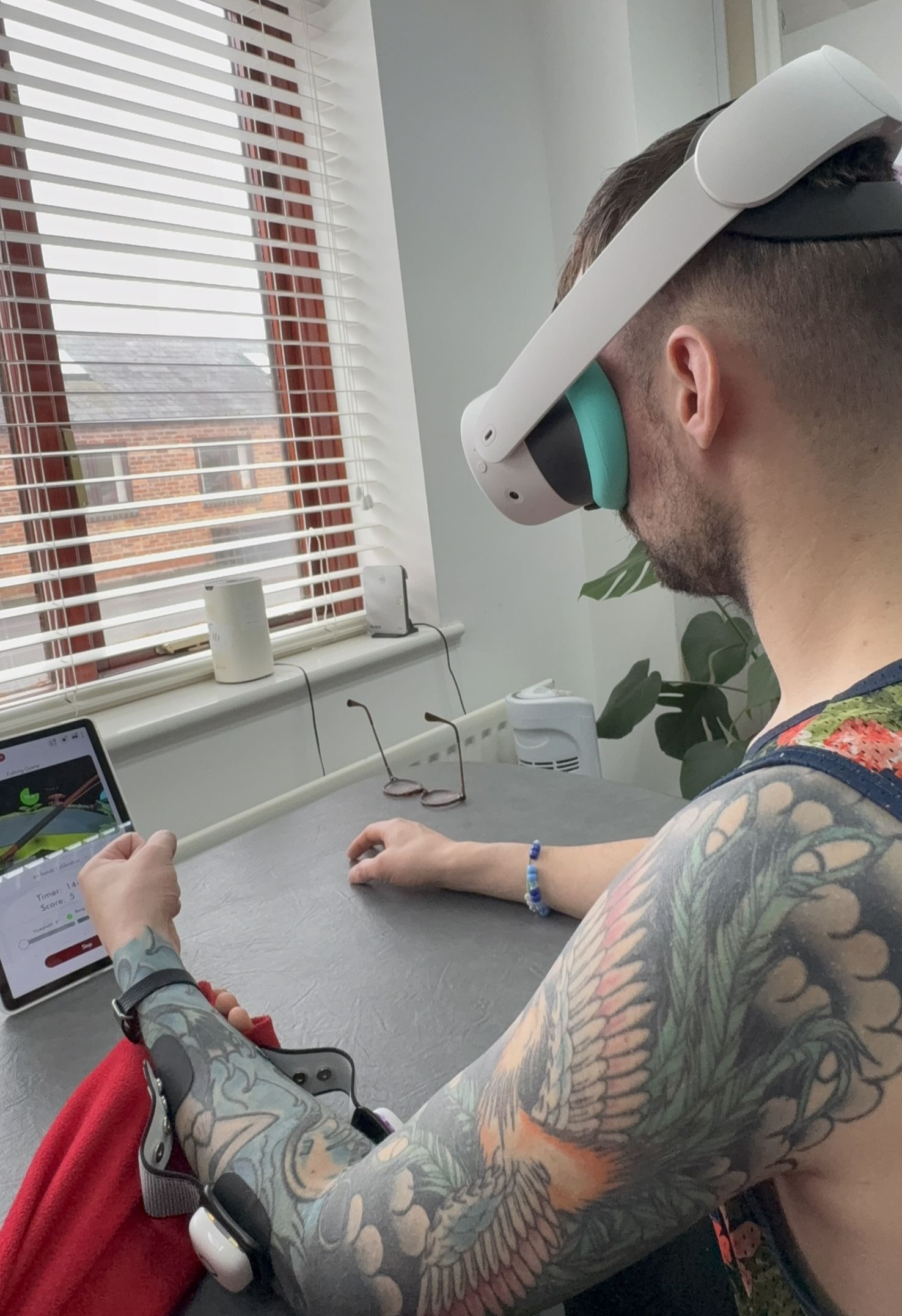
Recently, MiNT have been collaborating with Valkyrie Industries, the developers of v-health XR. This immersive rehabilitation system combines extended reality (XR), functional electrical stimulation (FES), and real-time movement tracking.
In this collaboration, supported by King's College London, we have participated in a multi-location feasibility study involving 28 people living with chronic stroke. Three of the four study locations were at Hobbs Rehabilitation.
The study allowed us to look beyond whether XR is simply interesting to patients. We wanted to understand how people with very different levels of upper-limb impairment could actually use this kind of system in a rehabilitation setting, and we learnt some useful lessons
What is v-health XR?
v-health XR combines:
- Extended Reality (XR)
- Functional Electrical Stimulation (FES)
- Real-time hand tracking
- Interactive rehabilitation games
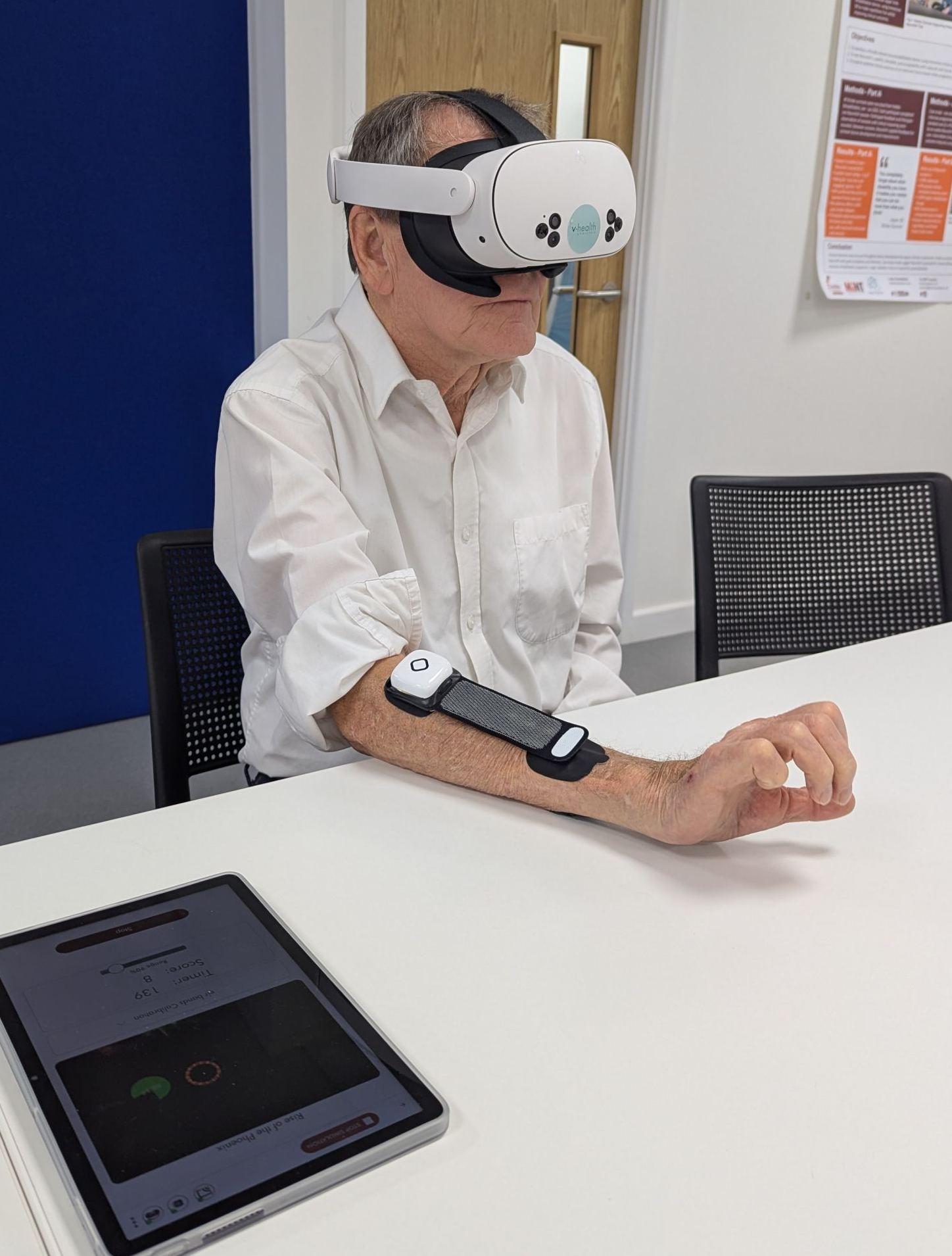
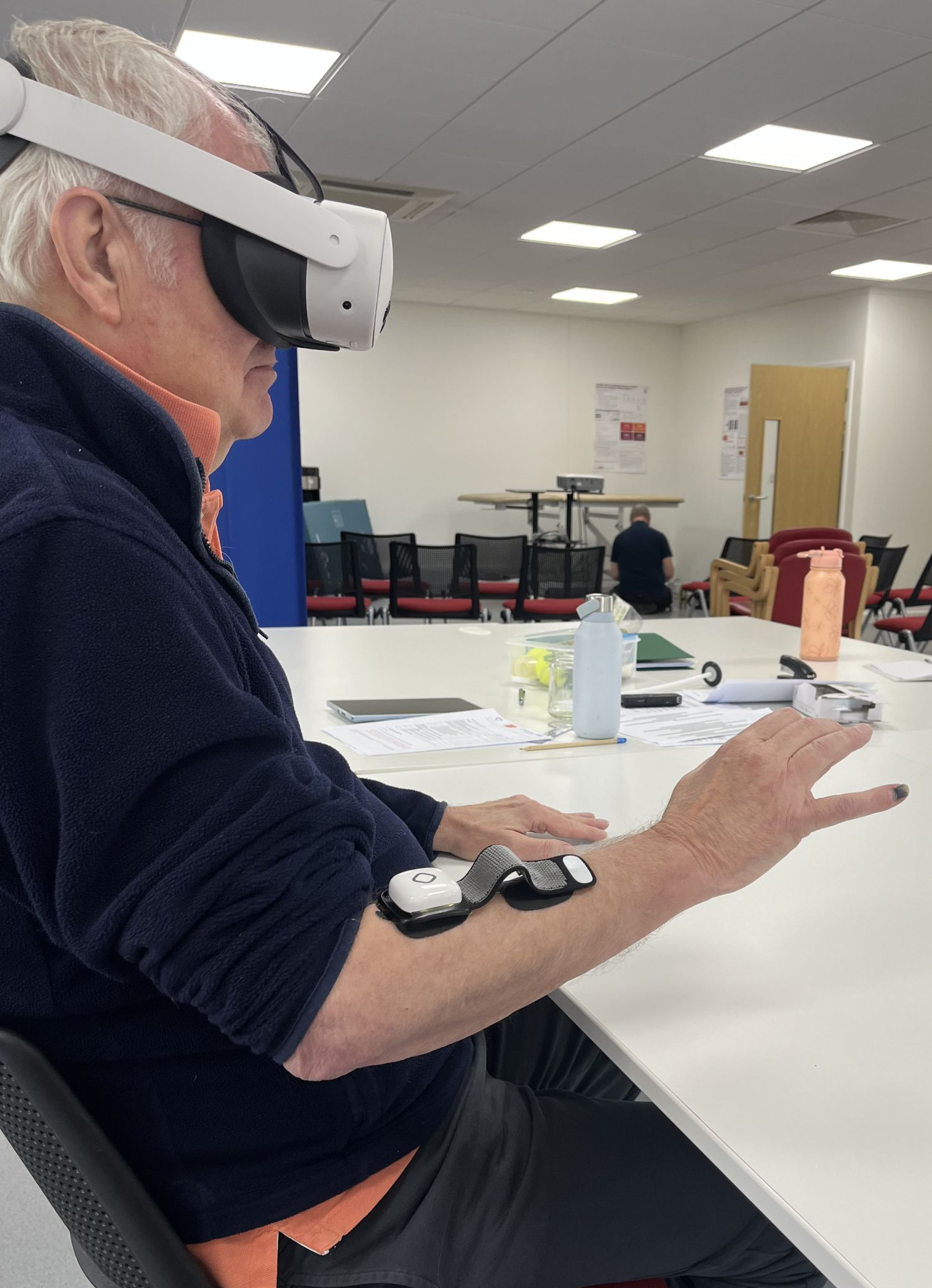
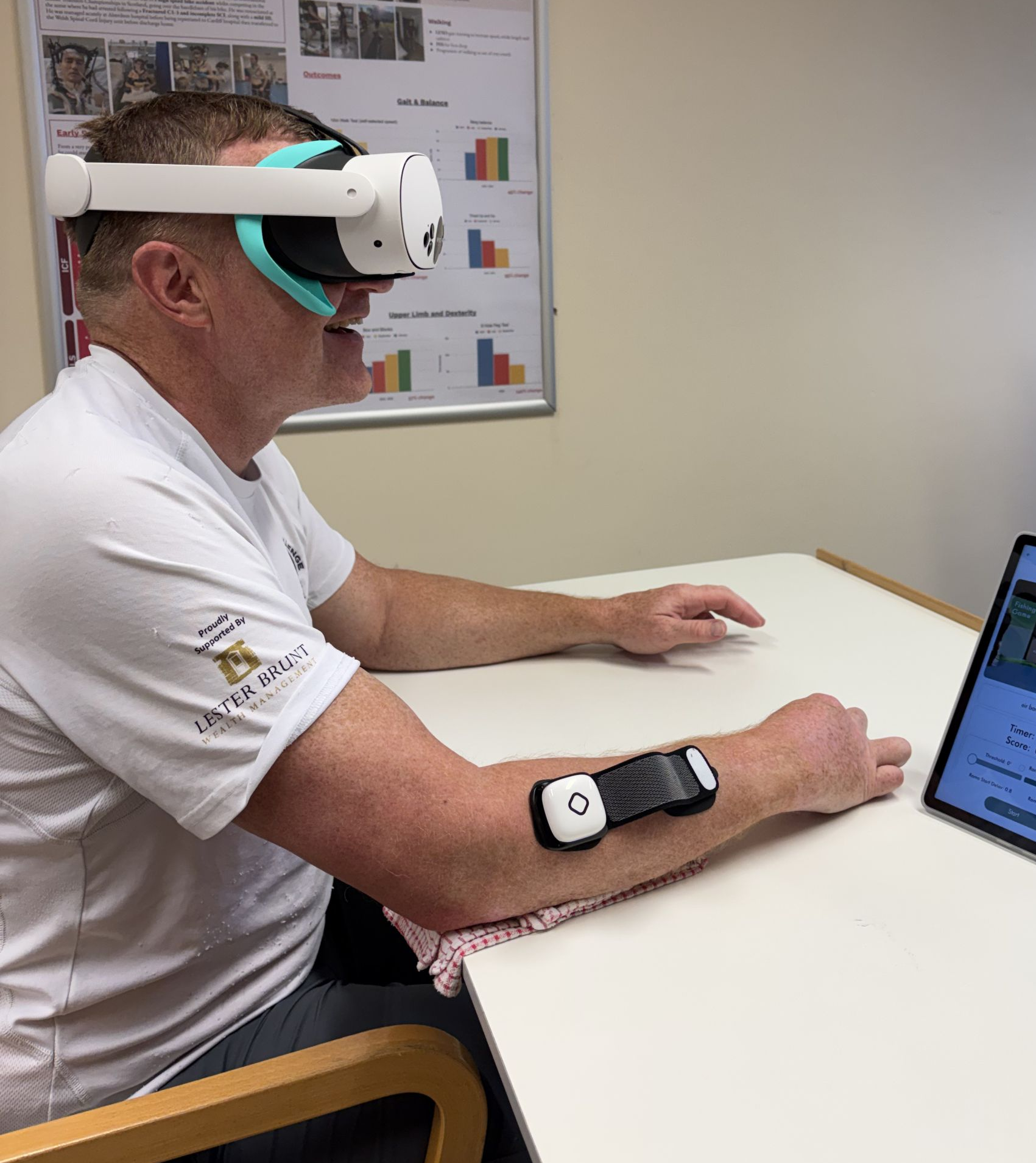
Participants wear lightweight wireless FES devices, called eir bands, alongside an XR headset. The system means that we are able to simulate a real-time response to the participant's movements, or attempts to move. The XR system can recognise when movement should be occurring by registering game progress, and if the target set within the game is not achieved, then the FES steps in to provide stimulation to support movement, or complete the movement, while the participant interacts with virtual or mixed-reality environments. This unique combination of XR and FES makes the v-health XR an incredibly novel and innovative device - while both have been used in isolation for some time, this study explored the possibility of combining both in one device solution.
The rehabilitation experiences included activities such as:
- Catching virtual fish (Fishing)
- Controlling the flight of a phoenix (Rise of the Phoenix)
- Grasping and placing virtual cubes to create a 3D object (Place the Cubes)
For our clinicians, the interesting part is the potential to combine active movement, assistance, repetition, feedback, and engagement within a single rehabilitation experience.
Who took part?
The feasibility study involved:
- 28 people living with chronic stroke
- 4 locations across the UK (3 of which were at Hobbs Rehabilitation)
- A broad range of upper-limb motor impairment, from mild to severe
Immersive sessions lasted up to 30 minutes, with participants using several XR rehabilitation experiences targeting movements such as wrist extension, wrist flexion, hand opening, grasping, and arm movement.
What does “FMA score” mean?
One of the measures we used to understand participants' motor ability was the Fugl-Meyer Assessment (FMA). The FMA is a commonly used clinical assessment of motor impairment following stroke. In the upper-limb context, it provides a structured way of assessing aspects of movement and motor control.
To put it simply, a higher FMA score indicates better motor function, while a lower score indicates greater impairment. This gave us a useful way to explore whether people with different levels of impairment were able to use the technology successfully.
Usability doesn’t depend on how much movement a patient has
One of the most encouraging findings was the overall usability of the system.
Participants reported usability of around 75% on the VR system usability questionnaire, but what was particularly interesting to us clinically was that usability did not appear to depend on motor ability. Participants with relatively severe impairment, including those with FMA scores below 20, were able to engage with the system, just as participants with substantially higher FMA scores were.
This matters because rehabilitation technology can unintentionally become easier to use for people who already have relatively good movement. If an interaction requires precise voluntary hand control, someone with significant weakness or reduced motor control may struggle to participate.
The combination of XR and FES offers another possibility: a person doesn't necessarily need to produce a large or perfect movement to interact with the rehabilitation experience. FES can assist, while the XR environment can translate available movement into meaningful feedback.
From our perspective, one of the most promising aspects of the approach is that the same rehabilitation platform can potentially be used with people who have very different movement capabilities.
The rehabilitation challenge needs to match the individual
We observed differences in how participants engaged with the different rehabilitation experiences according to their level of motor impairment. In the study, therapists selected appropriate activities for each individual, taking into account the person's clinical presentation and rehabilitation goals. Participant preference was also considered as part of that process.
Within this therapist-guided approach, we used our clinical reasoning with each individual and found that participants with greater motor impairment and lower FMA scores were best suited to spend more time with the game ‘Rise of the Phoenix’, an experience where wrist extension could be used to control the flight of a bird through floating rings. This gives a good indication of how future therapists' clinical reasoning will guide application of the device in a clinical setting.
Meanwhile, the game ‘Place the Cubes’ was more appropriate for participants with higher levels of motor function, which involved more complex interactions such as pinch grip, releasing and coordinated arm movement.
This highlights something we see every day in neurological rehabilitation: the right challenge depends on the individual.
Someone with very limited active movement may need an experience that provides a meaningful outcome from a relatively small movement or with greater assistance, while someone with better motor control may be ready for more complex tasks involving dexterity, grasping, releasing, reaching, and coordination.
This is where we see real potential in XR rehabilitation. Rather than expecting every patient to complete the same digital exercise in the same way, we can design a range of interaction styles around different levels of ability.
Immersion is only part of the story
There is a growing body of research investigating virtual reality in stroke rehabilitation, but from a clinical perspective, we think it's important to distinguish between immersive XR and virtual rehabilitation delivered through a conventional screen.
Immersive environments can create a stronger sense of presence and allow the person to interact with a three-dimensional environment using their own movements. But immersion alone doesn't make rehabilitation effective; rather, what activity the person is actually doing within that environment.
Are they practising a relevant movement? Are they sufficiently challenged? Are they receiving useful feedback? Can the task be adapted when their ability changes?
Our experience with v-health XR reinforces the importance of designing the rehabilitation task around the person, rather than simply putting an existing exercise into VR. Evidence suggests that XR needs to be specifically designed for therapeutic purposes to see any meaningful progress, as opposed to commercial gaming, which has been shown to not be effective for stroke rehabilitation.
People with greater impairment tended to receive more FES support
We also saw a relationship between participants' level of motor impairment and the amount of FES support they received. Participants with lower FMA scores generally received a greater proportion of stimulation time during the session, and higher stimulation intensities.
If someone has less voluntary movement available, they may require more assistance to generate the movement needed to interact with a task, and what is particularly interesting is that v-health XR allows that assistance to be delivered within the activity itself.
Instead of separating "exercise" from "stimulation", XR and FES can work together: the participant attempts a movement, the system detects if the virtual goal is unachieved, triggering the stimulation to support the movement completion, and the virtual environment provides immediate feedback. This lays the foundation for a truly adaptive therapeutic activity, where we can adjust our treatment to offer bespoke therapy to each individual, in the moment.
Why adaptive rehabilitation matters
No two people recovering from a stroke are the same, and even two people with similar clinical scores can have very different movement strategies, goals, confidence and tolerance for challenge.
As clinicians, we constantly adapt therapy based on what we see. We change the task, we change the level of assistance, we change the number of repetitions, we change the feedback, and we change the challenge when someone improves - or when they are struggling. Technology has the potential to help us do more of this, not less.
One of the exciting aspects of v-health XR is the amount of information generated while someone is interacting with the system. Movement, stimulation, and engagement can all be captured digitally.
Over time, that could support:
- More detailed movement analysis,
- Objective progress tracking,
- Adaptive levels of assistance,
- Personalised rehabilitation tasks,
- Potentially more informed clinical decision-making.
This feasibility study has helped demonstrate that the underlying approach is practical.
What did this study actually tell us?
Before we can establish clinical effectiveness, we need to understand whether people can use the technology, whether clinicians can incorporate it into therapy, and whether the system can accommodate people with different levels of ability. This study gave us encouraging answers to some of those questions.
We found that:
- 28 people with chronic stroke were able to engage with the system across a broad range of upper-limb impairment
- Reported usability was high
- Usability did not appear to be strongly related to motor impairment
- Therapists could use different XR experiences according to clinical presentation and participant preference
- Different interaction styles were associated with different levels of motor ability
- Participants with greater impairment generally required more FES support
What comes next?
For us at The MiNT Academy, the value of collaborating on this work is that it allows clinical experience and technology development to inform one another. We can now look further and try to learn what happens with continuous use of this technology, what kind of data it will provide to our clinicians, and ultimately, if this technology can help people access more intensive and engaging rehabilitation.
Future work is now looking towards:
- Longitudinal studies
- Home rehabilitation
- Biomechanical movement analysis
- Adaptive stimulation
- Increasingly personalised rehabilitation experiences
We're excited about the possibilities, but we're equally conscious that good rehabilitation technology needs to be driven by clinical need, not technology for technology's sake.
For us, our goal is to use technology to give people more opportunities to practise meaningful movement, at an appropriate level of challenge, with the support they need - and that’s what makes these collaborations between clinicians and technology developers so important.
If you're a case manager, clinician, researcher or someone working in neurological rehabilitation and would like to learn more about our work with XR and FES, please get in touch!
Funding Acknowledgement - The study was funded by UKRI, Innovate UK, Biomedical Catalyst grant, project 10143168.
Connect with us
Copyright© 2022 Hobbs Rehabilitation LTD
Alison Watt
Head of Clinical Operations
Alison is Head of Clinical Operations for The MiNT Academy. With over 10 years of clinical experience within specialist neurological services, Alison previously worked in the NHS specialising in stroke and neurorehabilitation.
As a previous NHS AHP Ward Manager, Alison has always worked within innovative therapy roles. This continues at The MiNT Academy, a growing neurotechnology platform combining clinical education and product development.
As a previous NHS AHP Ward Manager, Alison has always worked within innovative therapy roles. This continues at The MiNT Academy, a growing neurotechnology platform combining clinical education and product development.
Alison coordinates research, development and education activities to enable increased accessibility to clinically effective devices.
As Principle Investigator in technology trials, she has aided the development of devices from concept to market, with recent focusses on Virtual Reality and Exoskeletons. Alison has presented at and organised numerous national and international conferences, including as MiNT Chair at RehabWeek 2022. She has also completed a Post-Graduate Certificate in Medical Education and lectures at multiple UK academic institutions.
Alongside this, Alison works clinically at Hobbs Rehabilitation Intensive Neurotherapy Centre in Bristol, combining the use of therapy devices with conventional hands-on treatment, for outpatients with a variety of neurological conditions. Alison uses all of her roles to passionately drive forward the use of neurotechnology in clinical practice to optimise opportunities and outcomes for patients.
Helen Hobbs
The MiNT Academy Development Team
Helen is a specialist neurological physiotherapist with over 25 years of specialist clinical experience and extensive clinical skills including advanced Bobath training. She has a special interest inclinical education, training and research. Helen has held postgraduate clinical training roles at both Kings College NHS Hospital London Neuroscience Centre and Southampton University Hospital NHS Trust before establishing Hobbs Rehabilitation in 2005.
Helen's teaching and leadership skills resulted in international scholarships and fellowships taking Helen to the USA and South Africa. She has presented both nationally and internationally. Helen has close links with several academic institutions including Southampton, Imperial College, Loughborough , Portsmouth and Winchester Universities to provide clinical leadership for the design of future healthcare technologies and research projects.
Her publications have included the effects of robotic assisted gait training on vascular health in strokes and spinal cord injured patients and the European rehabilitation guidelines for MS patients post stem cell transplant.
Amy Dennis-Jones
The MiNT Academy Research Lead
Amy has over 20 years experience working within the field of Neurological rehabilitation. She has worked with a variety of settings capturing the full rehabilitation pathway from acute through to the community.
Since working for Hobbs Rehabilitation in 2015, Amy has worked with an array of neurotechnologies and is a trained Rewalk exoskeleton clinician. She has presented at varying conference and study days, and is on the local committee for ACPIN, a specialist interest group for physiotherapists working in Neurology.
Amy's position within Hobbs Rehabilitation has evolved into a split clinical and research role. She is part of the core development team working on MiNT, an innovative neurotechnology platform combining clinical education and product development as well as leading on research projects and further collaborations.
Outside of physiotherapy, Amy is a qualified yoga teacher and combines her experience with rehabilitation to teach chair/adaptive yoga classes.
Chrissy Bibby
The MiNT Academy Events Lead
Chrissy has worked in the field of adult acquired neurological speech and language therapy for over 15 years, initially in the NHS before joining Hobbs Rehabilitation, where she leads the Speech & Language therapy team. Clinically, she has a special interest in motor speech disorders and rehabilitation of the facial nerve.
Chrissy trained as a teacher before embarking on her career in neurological rehabilitation and enjoys using her teaching skills in all areas of her work with Hobbs Rehabilitation and MiNT.
As Events Lead for The MiNT Academy, Chrissy is embracing the opportunity to discuss with fellow clinicians, academics and industry partners the benefits of using neurotechnology with our communication impaired clients, while encouraging further development in this vital area.
Outside of speech and language therapy, Chrissy enjoys swimming, singing with her local rock choir, baking, sewing, and camping with her family.
Laura Marriott
The MiNT Academy Education Lead
Laura is a specialist Neurological Occupational Therapist with 15 years of experience, over 12 years of which is in the neurological sector. Laura has worked in the NHS from acute care through to community rehabilitation and outpatients and now works in the private sector where she is the lead Occupational Therapist for Hobbs Intensive outpatient rehabilitation service, coordinating intensive rehabilitation packages and treating patients with complex neurological requirements.
Her role within Hobbs has evolved and she has split clinical and research responsibilities. She is part of the MiNT Academy Development Team who have delivered an innovative neurotechnology platform combining clinical education and product development. Her role also involves leading on research projects and further collaborations. Laura has expert clinical skills used to implement neuro assistive and rehabilitation technology into functional contexts building the links between the companies and the patients. Laura presented at Virtual RehabWeek 2021 and is excited to be presenting at RehabWeek 2022 in Rotterdam, showcasing the merits and application of collaboration between skilled clinicians and engineers to create a device that has longevity with both clinicians and patients alike.
Outside of Hobbs Laura enjoys a busy family life, hiking, roller skating and painting.
Lizzie Williams
The MiNT Academy Development Team
Lizzie is a Specialist Neurological Physiotherapist working at Hobbs Rehabilitation since May 2020. She also has a background in orthopaedics, frailty and inpatient rehabilitation. Lizzie jumped at the opportunity to be involved in The MiNT Academy to combine her interest in technology and love for providing high quality rehabilitation for patients. Lizzie brings the perspective of a physiotherapist who routinely utilises neurotechnology with patients as well as teaching and supporting other clinicians in embedding it into practice.
Rachael Edwards
The MiNT Academy Development Team
Rachael Edwards developed a specialist interest in the role of technology in upper limb neurorehabilitation, whilst working as an Occupational Therapist on the upper limb program at The National Hospital for Neurology and Neurosurgery, Queen Square.
Rachael has relocated to Bristol and is setting up an Occupational Therapy service at Hobbs Rehabilitation Intensive Neurotherapy Centre, where she continues to explore the use of technology to support delivering intensive upper limb rehabilitation.
Louis Martinelli
The MiNT Academy Development Team
With degrees in Sport & Exercise Science (BSc) and Physiotherapy (MSc pre-registration), Louis has over 15 years’ experience of working in neurological rehabilitation.
Trained in the Ekso GT, ReWalk and the Able Exoskeleton, Louis has 10 years’ of hands-on experience with these types of devices with a variety of medical conditions at Hobbs Rehabilitation. In this time, he also trialed a number of other exoskeletons on the market with the aim of exploring what fits the clinical and functional needs of the patient.
Louis has helped establish a research partnership between Hobbs Rehabilitation with The University of Winchester, which in 2019 published an article on the effects exoskeleton rehabilitation can have on the vascular system in the Journal of Spinal Cord Medicine. Louis has also contributed to publications for the Bionic Leg (Clinical Rehabilitation, 2020) and more recently the GMove Suit (PLOS One, 2025) with the University of Southampton.
In 2022 Louis was on the expert panel for the M.O.T.I.O.N project, exploring mechanical orthosis for children with neurological disorders. He is currently project managing the UK government funded, multi centered, Eurostars Project FREEDOM which looks to establish the first exoskeleton designed for people with Multiple Sclerosis.
Barry Richards
Head of Commercial Operations
Barry brings extensive expertise in the medical device industry and healthcare markets from across Europe, North America, and Asia Pacific. Renowned as a subject matter expert, he possesses deep knowledge of exoskeleton technology and the neurological MedTech rehabilitation sector.
With over a decade of commercial experience, Barry has worked with leading neurological rehabilitation MedTech companies in various roles, including clinical, business development, market access, and commercial operations. He has successfully assisted multiple organisations in shaping their business development, sales, marketing, and clinical strategy plans at different stages of commercialisation.
With over a decade of commercial experience, Barry has worked with leading neurological rehabilitation MedTech companies in various roles, including clinical, business development, market access, and commercial operations. He has successfully assisted multiple organisations in shaping their business development, sales, marketing, and clinical strategy plans at different stages of commercialisation.
Barry has held director-level and senior management positions at both global and European levels. He also has a strong clinical background in physiotherapy, with significant experience in the neurological rehabilitation field, and demonstrates a high level of competency in operating advanced technologies.
Created with